Powerplay in Cricket: Rules, Overs, Strategy & Impact Explained

Cricket has evolved dramatically over the years, and one of the biggest innovations that changed the way matches are played is the Powerplay in cricket. Today, whether you’re a beginner trying to understand the basics or a fan looking to deepen your knowledge, the powerplay remains one of the most exciting and strategic phases of the game.
In fact, it’s where aggression meets precision—where matches can be won or lost in just a few overs.
In this detailed guide, therefore, we’ll break down everything you need to know about powerplay rules, strategies, real match examples, and why it continues to be such a crucial part of modern cricket.
1. Powerplay in Cricket – Meaning & Definition
What is Powerplay in Simple Terms?
The powerplay in cricket refers to to a specific set of overs during a match where fielding restrictions are applied. As a result, fewer fielders are allowed outside the 30-yard circle, giving batsmen a better chance to score boundaries.
In simple terms:
👉 Powerplay = fewer fielders on the boundary = more scoring opportunities
Purpose of Powerplay
The main goals of introducing powerplay are:
- To encourage attacking cricket
- Additionally, to increase entertainment value
- To create balance between bat and ball
- Most importantly, to prevent overly defensive field placements
Why Powerplay Exists
Before powerplays, teams could place fielders deep on the boundary early on, making scoring difficult. However, powerplay rules changed that by forcing fielding teams to bring players closer, thereby opening gaps for batsmen.
In other words, it’s like removing defenders in football for a few minutes—suddenly, scoring becomes easier but also riskier.
2. History & Evolution of Powerplay Rules
The powerplay didn’t always exist in its current form. It evolved over time as cricket adapted to modern audiences.
Key Milestones
| Era | Development |
|---|---|
| 1980s | Initial field restrictions introduced |
| 2005 | Term “Powerplay” officially introduced |
| 2011–2015 | Batting powerplays experimented |
| Modern Era | Simplified and standardized rules |
From Batting to Mandatory Powerplays
Earlier, teams could choose when to take powerplays (batting powerplay). This added complexity and confusion. Today, rules are more structured and easier to follow.
3. Powerplay Rules Across Formats
Powerplay rules vary depending on the format of cricket.
ODI Powerplay Rules
In One Day Internationals (50 overs), powerplay is divided into phases:
| Phase | Overs | Fielders Outside Circle |
|---|---|---|
| Powerplay 1 | 1–10 | Max 2 fielders |
| Powerplay 2 | 11–40 | Max 4 fielders |
| Powerplay 3 | 41–50 | Max 5 fielders |
👉 The first 10 overs are the most aggressive phase.
T20 Powerplay Rules
T20 cricket keeps it simple:
- Powerplay lasts first 6 overs
- Only 2 fielders allowed outside circle
This is why T20 matches often start explosively.
Other Formats
The Hundred
- First 25 balls = powerplay
- Similar restrictions apply
Test Cricket
- ❌ No powerplay exists
- Fielding is unrestricted
Special Situations
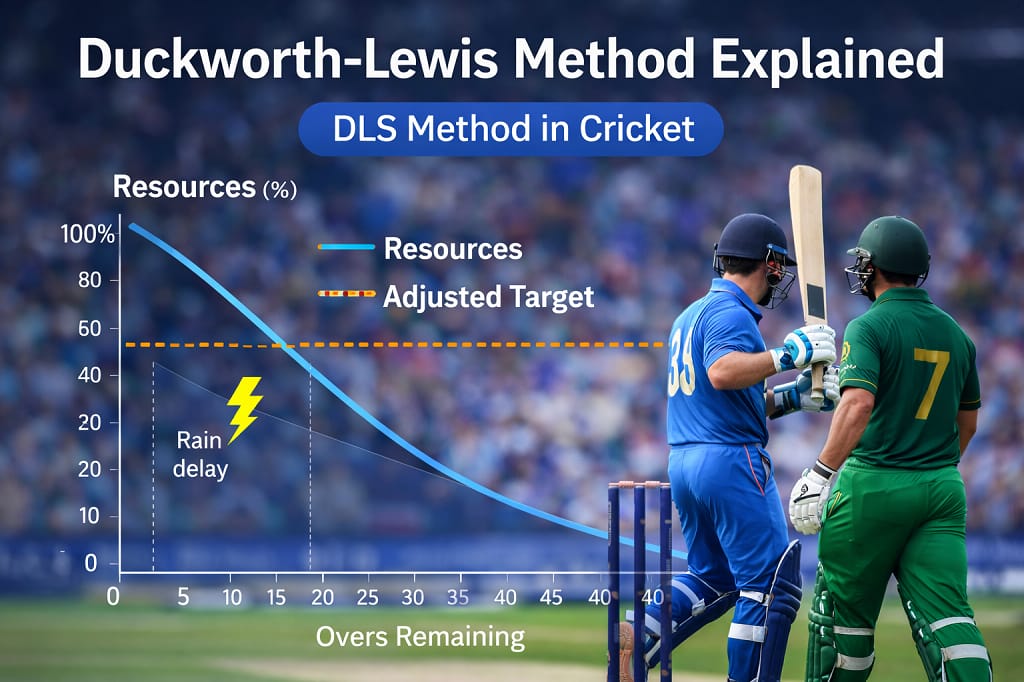
Rain-Shortened Matches
- Powerplay overs are adjusted proportionally
Rule Violations
- Penalties include:
- No-ball
- Free hit
- Field repositioning
4. Fielding Restrictions Explained
Inner circle rules
The inner circle (30-yard circle) is a marked area on the field. During Powerplay:
- Most fielders must stay inside this circle
Number of fielders outside the circle
- T20 Powerplay: Maximum 2 outside
- ODI Powerplay: Depends on phase
Key regulations every fan should know
- Wicketkeeper must remain behind stumps
- Fielders must not violate circle limits at delivery
- Penalties apply instantly for breaches
5. Importance of Powerplay in Cricket
The powerplay can define the entire match. In many cases, it sets the tone for what follows.
Impact on Match Momentum
A strong start during powerplay can:
- Set a high total
- Furthermore, put pressure on bowlers
- Ultimately, shift momentum early
Win Probability
Studies show that teams scoring well in the powerplay often win matches. Conversely, losing early wickets can drastically reduce winning chances.
Modern Cricket Perspective
Nowadays, powerplay is treated as a prime scoring opportunity. As a result, teams plan their entire innings around it.
6. Powerplay Strategies (Batting vs Bowling)
Batting Strategies
1. Controlled Aggression
- Attack loose balls
- Avoid reckless shots
2. Target Gaps
- Use field restrictions
- Focus on boundaries
3. Strike Rotation
- Keep scoreboard ticking
Quick Tips for Batsmen
- Play straight initially
- Exploit field gaps
- Avoid unnecessary risks
Bowling Strategies
1. Swing & Seam Movement
- Use new ball conditions
2. Tight Line & Length
- Avoid giving width
3. Smart Field Placement
- Protect boundaries strategically
Quick Tips for Bowlers
- Bowl full and straight
- Avoid predictable patterns
- Mix pace and length
7. Team Preparation for Powerplay
Modern cricket teams don’t rely on instinct—they use data and planning.
Data-Driven Planning
- Analyze opposition weaknesses
- Study scoring patterns
- Plan bowling matchups
Bowling Rotations
Teams assign:
- Strike bowlers for early wickets
- Defensive bowlers for control
Fielding Drills
- Practice catching under pressure
- Quick boundary saves
- Efficient positioning
8. Records & Statistics in Powerplay
Powerplay stats reveal interesting trends.
Highest Powerplay Scores
- Teams often score 60–80 runs in T20
- ODI teams aim for 50+ in first 10 overs
Lowest Totals
- Early collapses lead to totals below 20
- Usually due to aggressive failures
Wickets in Powerplay
- Balance between:
- Scoring fast
- Losing wickets
Key Insight
The best teams maximize runs without losing too many wickets.
9. Famous Powerplay Moments & Match Examples
Powerplays have produced unforgettable moments.
Example 1: Aggressive T20 Start
Teams like England and West Indies often dominate powerplays with fearless batting.
Example 2: ODI World Cup Matches
Early wickets in major tournaments have completely shifted match outcomes.
Example 3: IPL Performances
Many IPL matches are decided within the first 6 overs due to explosive starts
10. Common Powerplay Mistakes (And How to Avoid Them)
Batting Mistakes
❌ Over-aggression
❌ Ignoring match conditions
❌ Poor shot selection
✔ Solution: Play smart, not just aggressive
Bowling Mistakes
❌ Bowling too short
❌ Defensive mindset
❌ Predictable deliveries
✔ Solution: Attack stumps and vary pace
11. FAQs About Powerplay in Cricket
How long does Powerplay last?
- T20: First 6 overs
- ODI: First 10 overs (P1 phase)
Can teams choose when to take it?
No, modern rules have fixed Powerplay periods.
Who benefits more: batting or bowling?
Generally, batting teams benefit—but skilled bowlers can turn the tables.
What happens during rain interruptions?
Powerplay overs are adjusted based on match length.
Is Powerplay used in Test cricket?
No, Test matches do not include Powerplay rules.






Post Comment