Paramedical Courses After 12th 2026 — Full List, Eligibility, Fees, Salary & Career Scope (Without NEET)
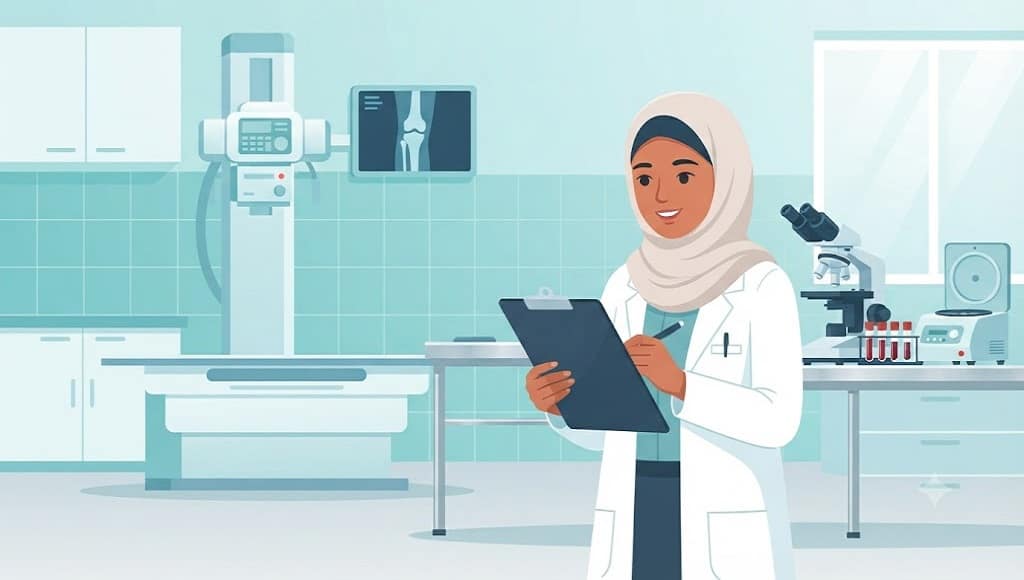
Not every student who dreams of a career in healthcare needs to chase an MBBS seat. If you have finished Class 12 and NEET did not go the way you hoped, or you simply never wanted the eight-year MBBS grind in the first place, paramedical courses genuinely open a rewarding door into the medical field. In fact, these programmes train you to work alongside doctors in labs, operation theatres, imaging centres, and physiotherapy units, and as a result, they get you job-ready in a fraction of the time.
In this guide, therefore, we will walk through the complete list of paramedical courses after 12th in 2026, along with eligibility rules, fees, and expected salary. Additionally, we will show you how to pick the paramedical course that actually fits your interests, rather than simply following the crowd.
What Are Paramedical Courses?
Basically, paramedical courses are specialised healthcare training programmes that prepare students to support doctors and medical teams in diagnosis, treatment, and patient care. To put it simply, think of a hospital as a well-run kitchen: the doctor is the head chef making the final call, but nothing works without the skilled team handling lab tests, imaging scans, and operation theatre setups. In other words, that skilled team is exactly what paramedical, or allied health, professionals become.
According to Wikipedia’s overview of allied health professions, these roles form a distinct category of healthcare work that is separate from, yet essential to, medicine, dentistry, and nursing.
Most importantly, the biggest draw for 12th-pass students is simple: paramedical courses do not require NEET. Instead, admission is largely merit-based or through separate, far less competitive entrance tests, which makes this route considerably more accessible overall.
Why Choose Paramedical Courses After 12th?
Paramedical Courses Are a Faster, More Affordable Alternative to MBBS
Generally speaking, most paramedical degrees wrap up in three to four years, while diploma or certificate options take even less time. Compared to the five-and-a-half-year MD/MBBS journey, therefore, the time-to-career gap becomes obvious rather quickly.
Paramedical Courses Offer a Wide Range of Specialisations
From laboratory science to radiology, and from physiotherapy to optometry, there is genuinely something here for almost every interest within healthcare. As a result, students rarely feel boxed into just one path.
Demand for Paramedical Courses Is Growing in the Healthcare Sector
As India’s hospital infrastructure expands and diagnostic technology becomes more advanced, the need for trained allied health professionals keeps climbing steadily every year. Consequently, job security in this field has genuinely improved over the last decade.
Paramedical Careers Offer Competitive Salary and Global Mobility
With the right specialisation, and a few years of experience, paramedical professionals can eventually earn salaries that rival many mainstream degree holders. Moreover, several roles carry international recognition once proper licensing is completed.
Paramedical Courses After 12th 2026 — Quick Overview
| Level | Duration | Eligibility | Approx. Fees (Total) |
| Certificate | 6-12 months | 10th or 12th pass | Rs. 10,000 – Rs. 60,000 |
| Diploma | 1-2 years | 12th with Science (PCB) | Rs. 30,000 – Rs. 1.5 lakh/year |
| Degree (B.Sc/BPT) | 3-4 years | 12th PCB, min. 50% marks | Rs. 50,000 – Rs. 3 lakh/year |
Overall, government colleges sit at the lower end of every fee range shown above, often by a significant margin. Private institutions, on the other hand, charge more, but they sometimes offer stronger lab infrastructure and better placement support in return.
Top 10 Paramedical Courses After 12th (With Career Scope)
1. B.Sc Medical Laboratory Technology (MLT)
This is consistently one of the most in-demand paramedical courses, since every hospital and diagnostic centre depends on lab technicians for blood work, pathology tests, and disease diagnosis. Therefore, opportunities rarely dry up, even in smaller towns.
2. B.Sc Radiology and Imaging Technology
Here, you will learn to operate X-ray, CT, MRI, and ultrasound machines. Since diagnostic imaging is becoming more central to modern treatment, this field, in particular, keeps growing steadily year after year.
3. B.Sc Operation Theatre Technology (OTT)
OT technologists manage surgical equipment, sterilisation, and assist surgeons during procedures. Admittedly, it is intense, fast-paced work, but hospitals are consistently short on trained OT staff, so demand remains high.
4. Bachelor of Physiotherapy (BPT)
Physiotherapy has expanded well beyond hospitals into sports medicine, wellness centres, and private practice. As a result, graduates in this field enjoy flexibility that few other paramedical specialisations can match.
5. B.Sc Nursing / GNM Nursing
Nursing remains one of the most stable and globally portable healthcare careers. Indeed, demand stays strong both within India and abroad, which makes it a dependable long-term choice.
6. B.Sc Optometry
Optometrists examine eyes, prescribe corrective lenses, and detect early signs of eye disease. Given how common vision problems have become, this specialisation, therefore, offers genuinely dependable, long-term demand.
7. B.Sc Dialysis Technology
Since kidney-related illnesses are rising steadily across India, trained dialysis technicians are increasingly sought after, both in hospitals and in dedicated dialysis centres.
8. Bachelor in Occupational Therapy
Occupational therapists help patients regain independence in daily activities after injury, illness, or disability. Slowly but surely, this area is gaining growing recognition within Indian healthcare.
9. B.Sc Cardiovascular Technology
This specialisation trains you to assist cardiologists during ECGs, angiographies, and cardiac procedures. Notably, it is also one of the higher-paying paramedical fields available today.
10. Diploma Equivalents (DMLT, Diploma in OTT, Diploma in Optometry)
Every major degree course listed above also has a shorter diploma version. So, if you want quicker entry into the workforce, or simply want to test the field before committing fully, this is often the smarter starting point.
Paramedical Courses: Degree vs Diploma vs Certificate — Which Is Better?
| Factor | Degree (B.Sc/BPT) | Diploma/Certificate |
| Duration | 3-4 years | 6 months – 2 years |
| Depth of Knowledge | Comprehensive, theory + practical | Practical, skill-focused |
| Career Growth | Higher ceiling, eligible for PG courses | Faster entry, limited upward mobility |
| Best For | Students planning a long-term specialised career | Students wanting quick employment |
Eligibility Criteria for Paramedical Courses 2026
- Completion of Class 12 with Physics, Chemistry, and Biology (PCB)
- Minimum 50% aggregate marks, though this varies by college and course
- Some diploma and certificate courses also accept Class 10 pass
- No fixed upper age limit for most courses, although certain government seats may specify one
Admission Process for Paramedical Courses — Entrance Exam vs Merit-Based
Merit-Based Admission to Paramedical Courses
Typically, most private and several government colleges admit students directly based on Class 12 marks, without requiring a separate entrance test at all.
Entrance Exam-Based Admission
However, some institutes, including certain AIIMS paramedical programmes, along with various state-level boards, conduct dedicated entrance exams. That said, competition here remains far less intense than NEET, though preparation still matters.
Documents Required
- Class 10 and 12 mark sheets and passing certificates
- Transfer certificate and migration certificate, where applicable
- Category certificate, if claiming reservation
- Valid government photo ID and recent passport-size photographs
Paramedical Courses Fees Structure 2026
| Course Level | Government College (per year) | Private College (per year) |
| Certificate | Rs. 8,000 – Rs. 20,000 | Rs. 15,000 – Rs. 40,000 |
| Diploma | Rs. 15,000 – Rs. 40,000 | Rs. 40,000 – Rs. 1.2 lakh |
| Degree (B.Sc/BPT) | Rs. 20,000 – Rs. 60,000 | Rs. 60,000 – Rs. 3 lakh |
Naturally, government colleges remain the more budget-friendly route overall. Even so, seats there are limited, so competition for them can still be meaningful.
Paramedical Courses Salary in India 2026
Generally, fresh graduates start somewhere between Rs. 2 LPA and Rs. 3 LPA. From there, this figure climbs meaningfully with experience and specialisation, especially in technical, equipment-heavy roles.
| Specialisation | Starting Salary | Experienced Salary |
| Radiology & Imaging | Rs. 2.5 – 3.5 LPA | Rs. 8 – 15 LPA |
| Medical Lab Technology | Rs. 2 – 3 LPA | Rs. 6 – 12 LPA |
| Physiotherapy (BPT) | Rs. 2.5 – 3 LPA | Rs. 7 – 12 LPA |
| Cardiovascular Technology | Rs. 3 – 4 LPA | Rs. 8 – 14 LPA |
| Nursing | Rs. 2 – 3 LPA | Rs. 5 – 10 LPA |
Career Opportunities After Paramedical Courses
Hospitals and Clinical Settings
Overall, government and private hospitals remain the largest employers. Specifically, they offer roles across labs, imaging departments, operation theatres, and rehabilitation units.
Government Jobs After Paramedical Courses
Furthermore, state health departments and central bodies regulated under the National Medical Commission regularly recruit paramedical staff. As a result, these positions offer strong job security along with steady career progression.
Higher Studies and Specialisation
From here, diploma holders can move up to a degree, while degree holders can pursue postgraduate specialisations. Consequently, this opens the door to research, teaching, or senior clinical roles later on.
Global Opportunities
With proper licensing exams, several paramedical qualifications, particularly nursing and physiotherapy, are recognised internationally. This, in turn, genuinely widens your career options beyond India.
How to Choose the Right Paramedical Courses — Quick Decision Guide
- Choose MLT if you enjoy precision, lab work, and behind-the-scenes diagnostic problem-solving
- Choose Radiology if you are comfortable with technology and want strong long-term earning potential
- Choose Physiotherapy if you prefer direct, ongoing interaction with patients and hands-on rehabilitation work
- Choose Optometry if you want a specialised, relatively low-stress clinical career with steady demand
- Choose Nursing if you want maximum job security and the widest range of global opportunities
Paramedical Courses vs MBBS — Which Is Right for You?
| Factor | MBBS | Paramedical Courses |
| Duration | 5.5 years (incl. internship) | 6 months – 4 years |
| Entrance Requirement | NEET qualification mandatory | Mostly merit-based, no NEET |
| Cost | High, especially private colleges | Comparatively affordable |
| Career Role | Independent medical practice | Support and assist medical teams |
Ultimately, neither path is objectively better. Instead, it genuinely comes down to how much time, money, and competitive pressure you are willing to take on, versus how quickly you want to start earning and working hands-on in healthcare.
Common Mistakes Students Make While Choosing Paramedical Courses
- Assuming every paramedical course carries the same career value, when specialisation actually matters enormously
- Not checking government job eligibility criteria before enrolling, since some state PSC posts require specific degrees
- Skipping accreditation checks and enrolling in an unrecognised institute
- Ignoring international scope, even though several roles offer strong opportunities abroad with proper licensing
- Underestimating short certificate courses, which can actually be a smart, fast entry point into hospital jobs
Meanwhile, if you are still weighing broader options beyond healthcare, our Top Courses After 12th guide covers career paths across every stream. Similarly, our Best Short Term Courses After 12th article is worth a look if quick employment is your priority instead.
FAQs — Paramedical Courses After 12th 2026
Can I join paramedical courses without NEET?
Yes. The vast majority of paramedical courses, including all diploma and most degree programmes, do not require NEET. Admission is usually merit-based or through separate, less competitive entrance exams.
What is the eligibility for paramedical courses after 12th?
Most degree courses require Class 12 with Physics, Chemistry, and Biology (PCB) and a minimum of 50% marks, though this varies by college. Several diploma and certificate courses also accept Class 10 pass.
How much do paramedical courses cost in India?
Fees range widely, from roughly Rs. 10,000 for short certificate courses to Rs. 3 lakh per year for degree programmes at private colleges. Government colleges are considerably cheaper across every level.
What salary can I expect after a paramedical course?
Starting salaries typically fall between Rs. 2 LPA and Rs. 4 LPA, depending on the specialisation, and experienced professionals in fields like Radiology or Cardiovascular Technology can earn Rs. 8-15 LPA.
Is paramedical a good career option in India?
Yes. With healthcare infrastructure expanding steadily and diagnostic technology advancing every year, demand for trained paramedical professionals continues to grow across both government and private sectors.
What is the duration of paramedical courses after 12th?
Certificate courses take 6 to 12 months, diploma courses take 1 to 2 years, and degree courses such as B.Sc or BPT take 3 to 4 years to complete.
Which paramedical course has the best career scope?
Medical Laboratory Technology and Radiology and Imaging Technology currently have the broadest career scope, since virtually every hospital and diagnostic centre depends on these specialisations.
Can paramedical graduates get government jobs?
Yes. State health departments and various central healthcare bodies regularly recruit trained paramedical staff, and these government positions offer strong job security.
Is paramedical form out for 2026 admissions?
Admission timelines vary by college and state, since there is no single centralised paramedical form for the entire country. It is best to check directly with your target college or your state's health sciences counselling authority for the current schedule.
Paramedical vs MBBS — which one should I choose?
Choose MBBS if you are prepared for a longer, more competitive path toward becoming an independent doctor. Choose paramedical if you want a faster, more affordable entry into a stable and specialised healthcare career.
Final Thoughts
Paramedical courses after 12th genuinely offer a practical, respected, and increasingly well-paying route into India’s healthcare sector, without the pressure of clearing NEET or committing to a decade-long medical journey. Whether you are drawn to lab science, imaging technology, physiotherapy, or patient care, there is a specialisation here that fits your interests and your timeline.
Take the time to research accredited colleges, compare government versus private fees, and think honestly about which specialisation genuinely excites you, rather than simply following whatever course your friends are choosing. That single decision, made thoughtfully, can shape a stable and rewarding career for years to come.
For more career guidance and education updates, visit InsightStudyHub.com.








4 comments