Board Exams
board exam preparation, CBSE class 10, cbse class 10 preparation strategy, cbse class 10 tips for weak students, cbse slow learners tips, CBSE study plan, cbse study plan beginners, cbse weak students study plan, exam strategy, how to improve cbse marks, how to study for cbse class 10, student revision tips, weak students
Insight Study Hub
2 Comments
CBSE Class 10 Preparation Strategy for Weak Students (Step-by-Step Guide)
Introduction – Why Weak Students Can Still Score Well in CBSE Class 10
Many students search for cbse class 10 preparation for weak students because they believe scoring well is only for toppers.
That is not true.
In my experience working with slow and average learners, marks improve when the right strategy replaces random hard work.
Weak students can score well if they:
-
follow NCERT properly,
-
focus on basics,
-
and revise smartly.
You do not need expensive coaching. You need a clear, simple and realistic plan.
Understanding the Challenges of Weak Students
Before diving into strategies, it’s essential to understand the unique challenges faced by weak students. These challenges may include:
Common Struggles Faced by CBSE Weak Students:
-
Lack of Concept Clarity: Many students struggle with fundamental concepts and feel lost when faced with more complex topics.
-
Time Management Issues: Weak students often find it difficult to manage their time effectively, leading to last-minute cramming.
-
Low Confidence and Anxiety: Past poor performance may have lowered their confidence, and the pressure of exams can cause anxiety.
The Importance of a Positive Mindset:
Developing a positive mindset is crucial for overcoming these obstacles. Instead of focusing on previous failures, students should embrace each study session as an opportunity to improve. A “can-do” attitude goes a long way in achieving academic success.
CBSE Class 10 Preparation Strategy for Weak Students – Complete Roadmap
This is the core section for cbse class 10 preparation for weak students.
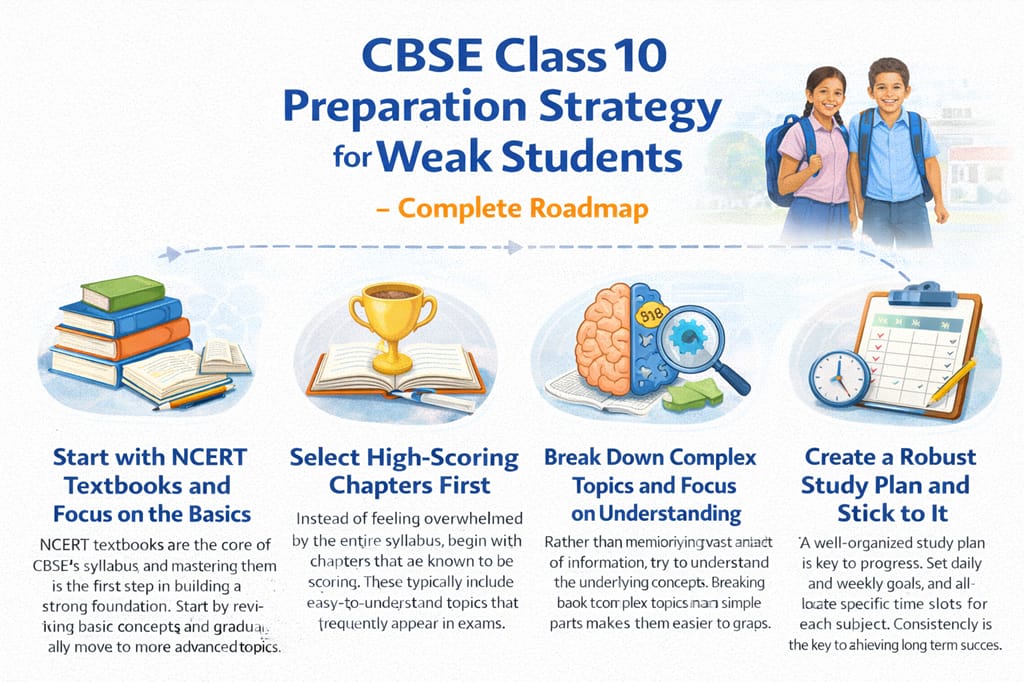
Start with NCERT Textbooks and Focus on the Basics
NCERT textbooks are the core of CBSE’s syllabus, and mastering them is the first step in building a strong foundation. Start by revising basic concepts and gradually move to more advanced topics.
Select High-Scoring Chapters First
Instead of feeling overwhelmed by the entire syllabus, begin with chapters that are known to be scoring. These typically include easy-to-understand topics that frequently appear in exams.
Break Down Complex Topics and Focus on Understanding
Rather than memorizing vast amounts of information, try to understand the underlying concepts. Breaking down complex topics into simpler parts makes them easier to grasp.
Create a Robust Study Plan and Stick to It
A well-organized study plan is key to progress. Set daily and weekly goals, and allocate specific time slots for each subject. Consistency is the key to achieving long-term success.
CBSE Study Plan for Beginners (Simple & Practical)
For weak students, a detailed study plan is essential. Here’s how to approach your study routine:
Daily Study Routine and How Many Hours Weak Students Should Study:
Start by dedicating around 4-5 hours a day for study. Break it into smaller blocks of 45–60 minutes with short breaks in between. This helps maintain focus without feeling burnt out.
Subject-wise time division for weak students
| Subject | Daily Time |
|---|---|
| Mathematics | 40 minutes |
| Science | 40 minutes |
| English | 25 minutes |
| Social Science | 35 minutes |
Weekly planning for beginners
-
5 days → learning + practice
-
1 day → revision
-
1 day → light test + analysis
Easy revision slots for beginners
-
10 minutes before sleeping
-
10 minutes before starting new study
Short revision keeps memory strong.
Effective Study Techniques for Weak Students
For slow learners, using effective study techniques is essential:
Using Visual Aids and Diagrams for Better Understanding
Visual aids like charts, diagrams, and mind maps help to simplify complicated topics. These tools make abstract concepts more concrete, enhancing understanding.
Active Recall and Spaced Repetition Techniques
Active recall involves testing yourself on what you’ve learned, while spaced repetition involves revisiting topics at increasing intervals. These techniques are scientifically proven to improve memory retention.
Breaking Long Questions into Smaller Parts
When tackling lengthy questions, break them down into smaller, manageable parts. This approach prevents students from feeling overwhelmed and ensures that all aspects of the question are addressed.
How to Manage Time and Stay Motivated
Time management is critical, so use tools like timers or apps to track your progress. Regular breaks help you stay fresh and focused. Always remind yourself of your long-term goal to keep the motivation high.
CBSE Slow Learners Tips to Improve Daily Performance
Slow learners can still make steady progress every day. Here’s how:
Focus on Small Study Targets (30–40 Minutes Rule)
Instead of long, exhausting study sessions, focus on small, bite-sized study blocks. Study for 30–40 minutes at a stretch, followed by a short break.
Daily Revision Methods for Slow Learners
Daily revision helps reinforce what you’ve learned. Review notes or practice problems from the previous day to ensure concepts stay fresh in your mind.
Tips for Retaining Information and Avoiding Forgetting
To retain information, try teaching the concept to someone else. If you can explain it clearly, it’s a sign that you’ve truly understood it.
Subject-Wise Preparation Tips for Weak Students
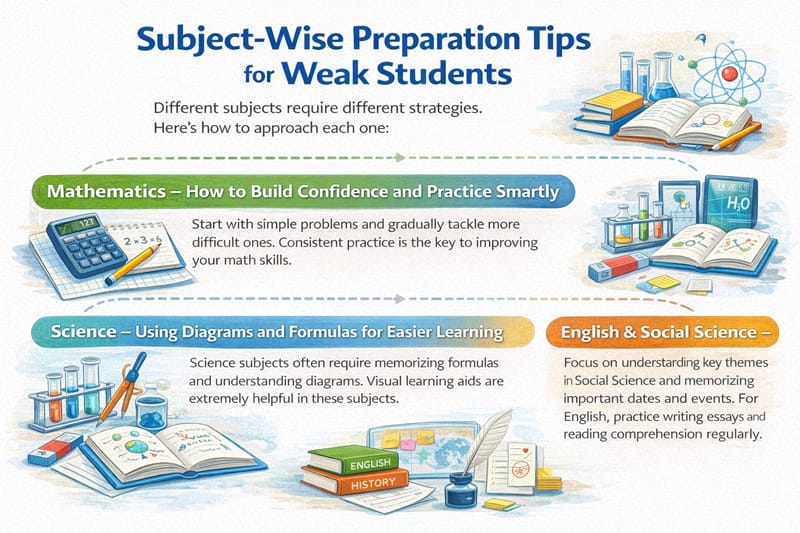
Different subjects require different strategies. Here’s how to approach each one:
Mathematics – How to Build Confidence and Practice Smartly
Start with simple problems and gradually tackle more difficult ones. Consistent practice is the key to improving your math skills.
Science – Using Diagrams and Formulas for Easier Learning
Science subjects often require memorizing formulas and understanding diagrams. Visual learning aids are extremely helpful in these subjects.
English & Social Science – Scoring Strategies and Easy Memorization Techniques
Focus on understanding key themes in Social Science and memorizing important dates and events. For English, practice writing essays and reading comprehension regularly.
How to Improve CBSE Marks Without Extra Coaching
You don’t always need extra coaching to boost your marks. Here are some tips:
Using Previous Year Question Papers for Practice
Previous year’s question papers are an excellent way to familiarize yourself with the exam pattern. They also highlight important topics that are frequently tested.
How to Analyze Mistakes and Learn from Them
After every mock test or practice session, review your mistakes. Understand why you made them and ensure you don’t repeat them in the actual exam.
Smart Answer Writing Techniques to Improve Marks
Answer writing isn’t just about knowing the right information; it’s about presenting it well. Be concise, write legibly, and follow the structure of the question.
Motivation & Mindset – How Weak Students Can Stay Consistent
Staying motivated is critical, especially for weak students:
Handling Low Marks and Overcoming Self-Doubt
It’s easy to get discouraged after a bad test result, but remember, each test is just a learning opportunity. Focus on continuous improvement rather than comparison.
Tips for Staying Motivated and Consistent in Preparation
Set small, achievable goals and celebrate when you achieve them. Keep reminding yourself of your long-term goal: academic success.
Importance of Setting Realistic Goals and Tracking Progress
Set specific and measurable goals, and track your progress regularly. This helps you stay on course and stay motivated.
Common Mistakes Weak Students Should Avoid
Avoid these common mistakes to improve your chances of success:
Over-Studying Without Planning
Quality is more important than quantity. Focused study sessions with proper planning yield better results than long, unfocused ones.
Ignoring NCERT and Focusing Too Much on Guidebooks
While guidebooks may help, NCERT is the foundation. Don’t neglect it in favor of supplementary materials.
Last-Minute Preparations and Stress
Last-minute cramming is ineffective. Stick to your study plan, and avoid the stress of rushed preparations.
Final 30 Days Preparation Strategy for Weak Students
The last 30 days before the exams are crucial:
How to Revise in the Last Month Before Exams
Focus on revision rather than learning new material. Review all key topics, and give extra attention to areas where you’re still struggling.
Mock Test Strategy and Exam-Day Preparation Tips
Take as many mock tests as possible. Practice time management, and ensure you’re comfortable with the exam format.
Last-Minute Focus on Important Topics and Concepts
In the final days, focus on high-priority topics that are more likely to appear in the exam.
FAQs – CBSE Class 10 Preparation for Weak Students
How Many Hours Should a Weak Student Study Daily?
Weak students should study for about 4-5 hours daily, breaking it into manageable study blocks.
Can Weak Students Score 70% or Above in CBSE Class 10?
Yes, with consistent effort, smart strategies, and the right mindset, even weak students can score 70%+.
Is NCERT Enough for Weak Students?
Yes, NCERT textbooks are sufficient for building a strong foundation in CBSE.
What Are the Best Ways to Prepare If Time Is Limited?
If time is limited, prioritize important chapters, practice previous year’s question papers, and focus on revision.
Conclusion – Every Student Can Score Well in CBSE Class 10
If you’re looking for CBSE Class 10 preparation for weak students, remember this:
With the right preparation strategy, a positive mindset, and consistent effort, weak students can significantly improve their performance in the CBSE Class 10 exams. Focus on understanding concepts, setting realistic goals, and staying motivated. Success is within reach for every student.
For more tips on how to approach your revision in the final weeks leading up to the exams, check out our Last 30 Days Study Plan for Board Exams 2026 or our CBSE Revision Strategy: Smart & Effective Plan for Exam Success. These resources will help ensure that you make the most of your study time!










2 comments