Board Exams
board exam preparation, CBSE board exam 2026, cbse class 10 preparation 2026, cbse class 12 preparation 2026, cbse exam preparation 2026, CBSE exam strategy, cbse exam strategy 2026, CBSE latest exam pattern, CBSE preparation tips, CBSE revision tips, CBSE students guide, CBSE study plan, cbse study plan 2026, cbse syllabus and exam pattern 2026, how to prepare for cbse board exam 2026
Insight Study Hub
6 Comments
How to Prepare for CBSE Board Exam 2026 – Complete Study Guide

The countdown to the CBSE Board Exam 2026 might seem long right now, but ask any topper, and they will tell you the same thing: time flies faster than you think. Whether you are in Class 10 or Class 12, this year is a defining moment in your academic journey.
Many students make the mistake of waiting until the last few months to start “serious” studying. But the secret to scoring above 90% isn’t pulling all-nighters in January; it’s consistent, smart preparation starting right now.
This guide isn’t just a list of instructions. Think of it as your roadmap. We are going to break down exactly how to tackle the new exam pattern, manage your syllabus without burning out, and actually enjoy the process of learning.
Significance of the Exam and Early Preparation
Why is everyone so obsessed with board exams? It’s not just about the marksheet. The discipline you build now sets the foundation for competitive exams like JEE, NEET, or CUET. Early preparation is crucial because it allows you to learn concepts deeply rather than just memorizing them for a test. When you start early, you have the luxury of time—time to make mistakes, fix them, and revise without panic.
Key Updates and Exam Pattern for CBSE 2026
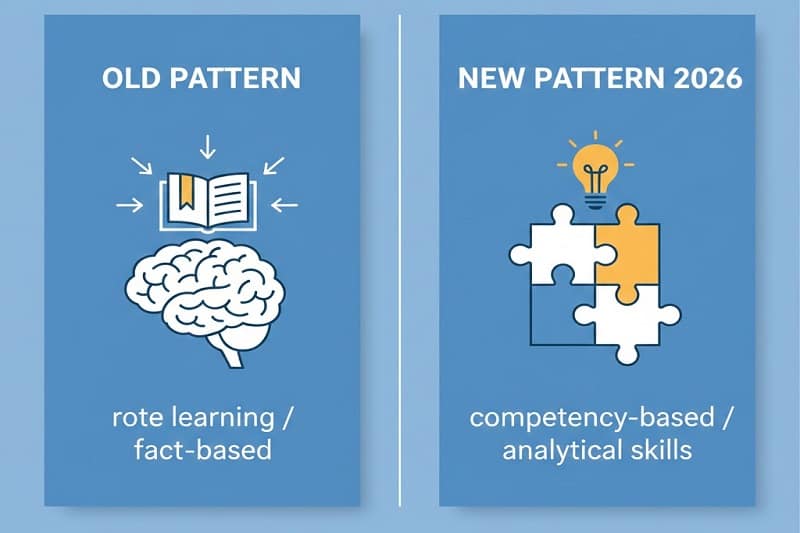
Before you pick up a pen, you need to know the rules of the game. The Central Board of Secondary Education (CBSE) has been shifting gears towards Competency-Based Education (CBE).
What’s New in CBSE Board Exam 2026?
Gone are the days when rote memorization could get you a perfect score. The 2026 exams will likely see an increased weightage of competency-based questions. These include:
- Case-based questions
- Source-based integrated questions
- Real-life application scenarios
The goal is to test if you understand the concept, not just if you remember the definition.
Overview of Exam Format
While the specific blueprint is released closer to the exam, the general trend remains consistent.
| Area | What to expect in 2026 |
|---|---|
| Question type | Objective, short answer and case-based questions |
| Learning focus | Concept clarity and application |
| Internal assessment | Project work, practicals, activities |
| Core reference | NCERT textbooks |
General Marking Scheme Breakdown:
|
Component |
Weightage (Approx.) |
Description |
|---|---|---|
|
Theory Exam |
80 Marks |
The main written paper. Includes MCQs, Short & Long Answers. |
|
Internal Assessment / Practical |
20 Marks |
School-based assessment including projects, lab files, and periodic tests. |
Note: For science subjects in Class 12, the split is usually 70 (Theory) + 30 (Practical).
How to Prepare for CBSE Board Exam 2026: Step-by-Step Guide
Success is rarely an accident. It is usually a result of a well-executed plan. Here is how you can build yours.
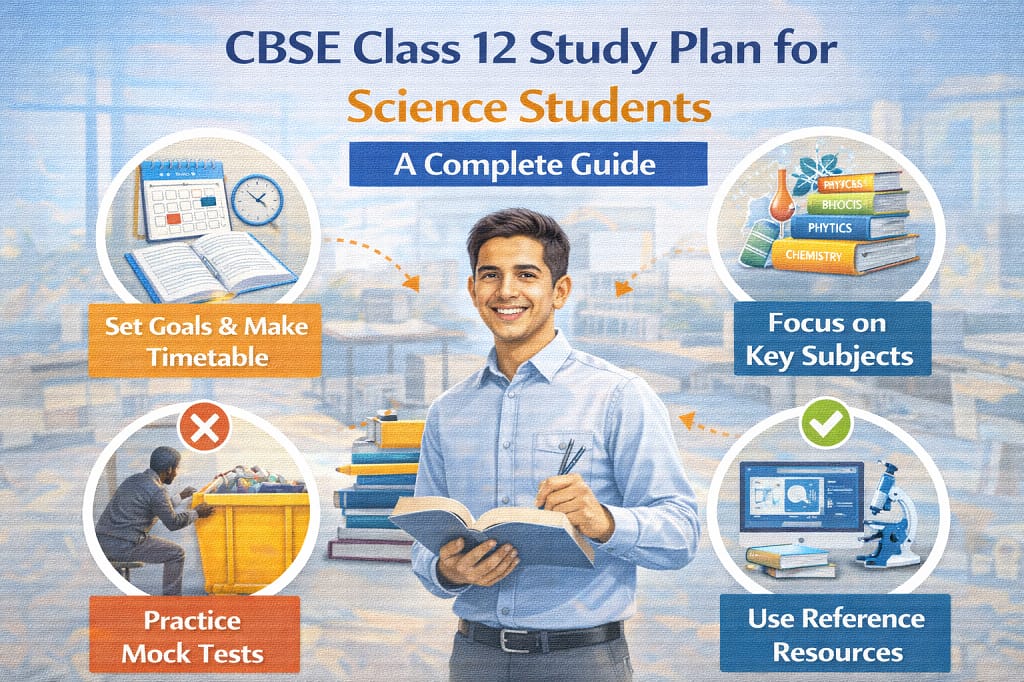
Create a Study Plan
A timetable shouldn’t be a prison. It should be a flexible guide. Don’t schedule every single minute of your day. Instead, set daily goals. For example, “Finish Chemical Reactions Chapter” is a better goal than “Study Chemistry from 4 PM to 6 PM.” If you finish early, you get free time. This rewards efficiency.
Simple weekly structure example
| Area | What to expect in 2026 |
|---|---|
| Question type | Objective, short answer and case-based questions |
| Learning focus | Concept clarity and application |
| Internal assessment | Project work, practicals, activities |
| Core reference | NCERT textbooks |
Focus on NCERT and Concept Clarity
This cannot be stressed enough: NCERT is your Bible.
About 90-95% of the board paper is directly derived from NCERT textbooks. Many students ignore NCERT for fancy reference books, only to realize later that the board exam questions were hidden in the NCERT lines they skipped. Read the text, solve the in-text questions, and do the back-of-chapter exercises religiously.
Practice Previous Year Papers
Imagine knowing the questions before walking into the exam hall. Solving the last 5-10 years of papers is the closest you can get to that. It helps you understand:
- The language of the questions.
- Which topics are repeated often.
- How to manage your time during the 3-hour duration.
Revise Smartly
The human brain forgets. Spaced repetition is key. Don’t study a chapter and forget it for three months. Review your notes weekly. Use flashcards for formulas and dates.
Writing Skills and Answer Presentation
You might know the answer, but can you present it well?
- Use Bullet Points: Examiners love structured answers.
- Underline Keywords: Make it easy for the checker to spot the important terms.
- Draw Diagrams: Even in non-science subjects, a flowchart or a small diagram can boost your score.
Also read: Top Courses After 12th
Subject-Wise Preparation Strategy for CBSE Board Exam 2026
Every subject demands a different approach. You can’t study Math the same way you study English.
Science (Physics, Chemistry, Biology)
- Physics: Focus on derivations and numerical problems. Don’t just memorize formulas; understand how they are derived.
- Chemistry: Organic chemistry requires daily practice of reactions. For Physical chemistry, master the numericals. Inorganic chemistry is all about NCERT reading.
- Biology: Diagrams are your best friend. Practice drawing and labeling them neatly. Stick to NCERT terminology.
Mathematics
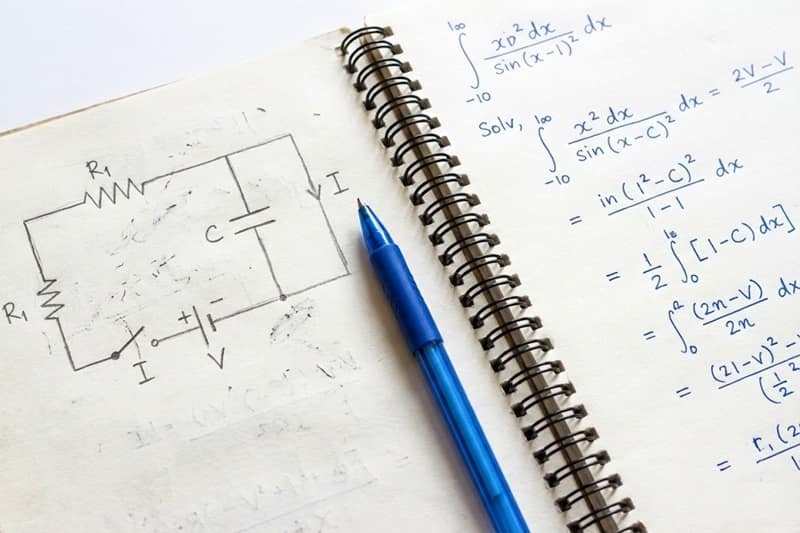
Math is not a spectator sport. You cannot learn it by reading; you have to do it.
- Solve every single example in the NCERT book.
- Maintain a separate notebook for formulas.
- Identify your weak areas (e.g., Trigonometry or Calculus) and give them extra time.
Social Science
This subject is often lengthy.
- History: Create timelines to remember dates and events.
- Geography: Map work is easy marks—don’t neglect it.
- Civics/Economics: Relate concepts to current news to understand them better.
Languages (English, Hindi, etc.)
Languages are often the differentiator between a 90% and a 95%.
- Read the chapters thoroughly to handle value-based questions.
- Practice writing formats (letters, essays, notices) strictly according to the latest CBSE guidelines.
Best Books and Study Resources for CBSE Board Exam 2026
Don’t hoard books. Stick to a few trusted resources.
- Primary Source: NCERT Textbooks (Current Edition).
- Reference Books (Science/Math): Books like R.D. Sharma (Math) or H.C. Verma (Physics) are great for practice but stick to the syllabus.
- Question Banks: Reliable publishers like Oswaal or Arihant often release question banks that align with the new competency-based pattern.
- Online Platforms: Use YouTube for concept clearance but avoid passive watching.
Managing Stress and Staying Healthy During Preparation
Your brain is an organ, and like any muscle, it needs rest and fuel.
- Sleep: You need 7-8 hours of sleep to consolidate memory.
- Diet: Avoid heavy, oily food that makes you lethargic. Hydrate often.
- Breaks: Use the Pomodoro technique (25 minutes study, 5 minutes break).
Mental health is just as important. If you feel overwhelmed, talk to a parent or teacher. Remember, one exam does not define your worth.
Final Tips to Score Above 90% in CBSE Board Exam 2026
- Analyze Your Errors: When you solve a sample paper, spend as much time analyzing your mistakes as you did solving the paper.
- Limit Social Media: It’s a massive distraction. Uninstall apps that eat up your time.
- Be Consistent: Studying 3 hours every day is far better than studying 12 hours once a week.
What to Study First for CBSE Board Exam 2026?
| Subject | Start with |
|---|---|
| Science | Key numericals and core concepts |
| Maths | Algebra, Trigonometry and Geometry basics |
| Social Science | History and Geography core chapters |
| Languages | Grammar and writing sections |
How Parents Can Support Students During Preparation
Parents, your role is to be a cheerleader, not a drill sergeant.
- Create a Conducive Environment: Ensure the house is relatively quiet during study hours.
- Don’t Compare: Comparing your child to their cousin or neighbor adds unnecessary pressure.
- Watch for Stress: If your child looks unusually tired or irritable, suggest a break or a family outing.

Frequently Asked Questions (FAQs)
Q: How many hours should I study for CBSE 2026?
A: Quality matters more than quantity. 4-6 hours of focused self-study (excluding school/coaching) is usually sufficient if you are consistent.
Q: Are NCERT books enough for 90%?
A: Yes, absolutely. If you master every line of NCERT and solve past papers, 90% is very achievable.
Q: When should I finish my syllabus?
A: Try to complete the syllabus by December 2025. This gives you January and February exclusively for revision and sample papers.
Q: How do I handle competency-based questions?
A: These questions test understanding. Don’t rote learn. Ask “Why” and “How” for every concept you study.
Conclusion
Preparing for the CBSE Board Exam 2026 is a marathon, not a sprint. It requires patience, smart planning, and a positive mindset. Instead of feeling overwhelmed by the full syllabus, focus on one small goal at a time and keep moving forward with consistency.
If you want structured study help, subject-wise guidance, and the latest exam-related updates, you can also explore our learning resources on Insight Study Hub to support your daily preparation.
Start today, trust your efforts, and believe in your ability to succeed. With the right strategy and steady practice, you truly can achieve your best result in the CBSE Board Exam 2026.








6 comments