Board Exams
Exams
board exam preparation, CBSE Class 12, cbse class 12 preparation science, cbse class 12 study plan for science students, cbse science board exam tips, cbse science stream study plan, class 12 science study plan, exam strategy, physics chemistry biology, physics chemistry biology study plan, physics chemistry maths plan, science students, study plan
Insight Study Hub
5 Comments
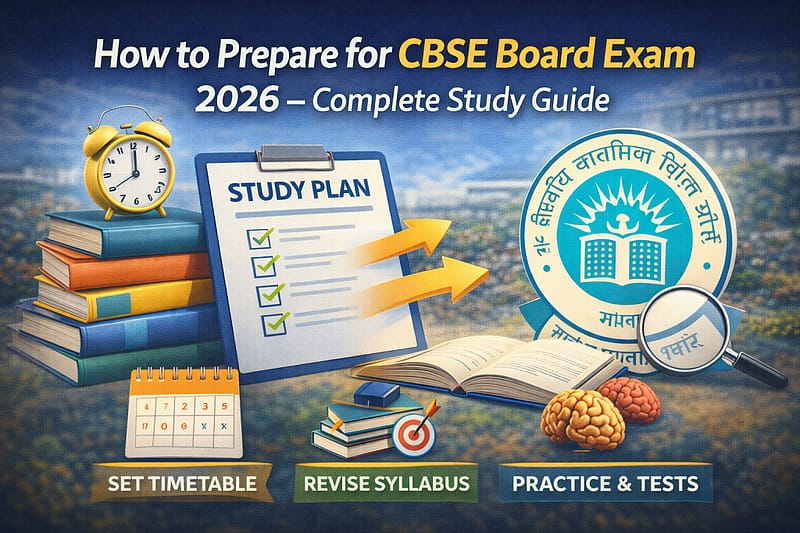
CBSE Class 12 Study Plan PDF (Free Download + Daily Routine 2026)
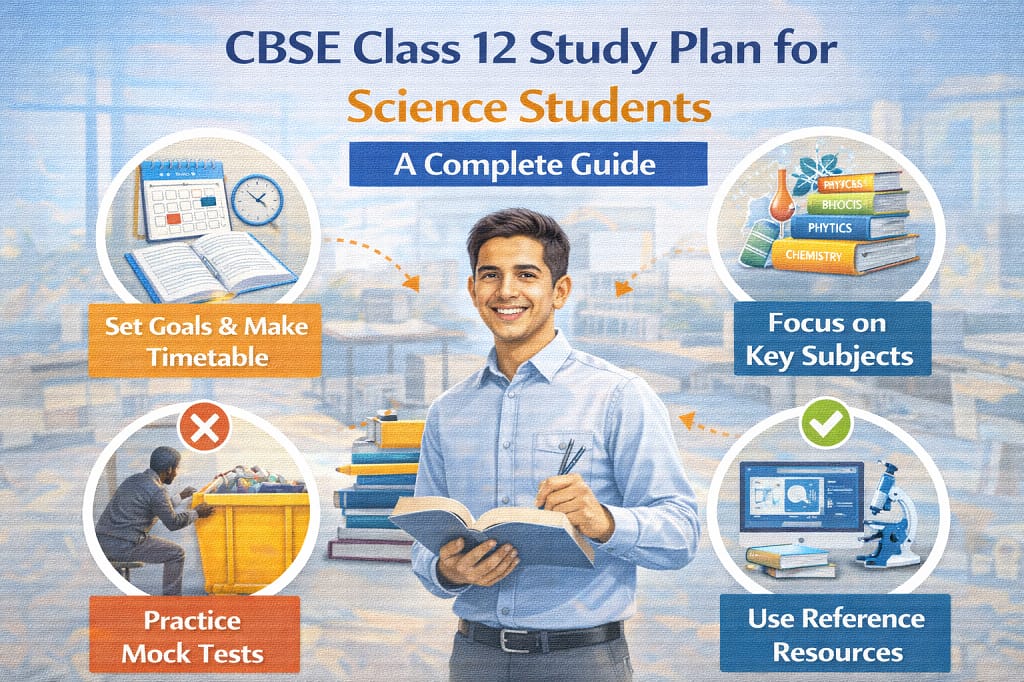
Class 12 Science is demanding because you must manage multiple subjects, each with its own learning style. However, a well-structured CBSE Class 12 study plan for science can help you achieve several key benefits.
Firstly, it allows you to stay ahead of school tests, ensuring that you are consistently prepared. In addition, this proactive approach helps you avoid last-minute panic during exams. Moreover, with a focused plan, you can improve your accuracy and confidence in tackling complex problems.
Furthermore, a balanced approach for Physics, Chemistry, and Maths is crucial. By dedicating time and effort to all subjects equally, you ensure that no subject becomes your weak link during the board exams.
Understanding the CBSE Class 12 Science Stream
Before planning, you must clearly understand what you are preparing for.
You usually study:
-
Physics
-
Chemistry
-
Mathematics
-
Biology (for PCB students)
PCM vs PCB
| Stream | Subjects |
|---|---|
| PCM | Physics, Chemistry, Mathematics |
| PCB | Physics, Chemistry, Biology |
Balancing all subjects is essential, as the marks from each contribute to your final percentage. Therefore, it’s crucial to give equal attention to each subject.
Moreover, the syllabus structure directly affects your study schedule. Some chapters are concept-heavy, requiring deeper understanding and application, while others are memory-based, relying on recall and practice. As a result, your study plan must reflect these differences to optimize your preparation.
How to Create Your CBSE Science Stream Study Plan
This section supports your cbse science stream study plan.
Step-by-step method
-
List all chapters for every subject.
-
Mark:
-
strong chapters
-
average chapters
-
weak chapters
-
-
Assign more time to weak and average areas.
Set realistic goals
Avoid planning 8–10 chapters in a week.
Instead, focus on completion with understanding.
Manage time across subjects
A practical weekly split:
-
Physics – 30%
-
Chemistry – 30%
-
Maths / Biology – 40%
Month-Wise and Year-Wise Preparation Strategy
Divide your year into three clear phases.
| Phase | Objective | Activities | Goal |
|---|---|---|---|
| Phase 1 | Syllabus Completion | Finish theory properly | Complete understanding of concepts in all subjects. |
| Solve basic questions | Build foundational knowledge. | ||
| Phase 2 | Practice Phase | Solve topic-wise questions | Improve problem-solving ability and confidence. |
| Work on previous year papers | Familiarize with exam pattern and types of questions. | ||
| Phase 3 | Revision Phase | Create short notes | Summarize and highlight key concepts. |
| Focus on formulas and reactions | -Memorize important formulas, reactions, and derivations. | ||
| Take full-length mock tests | -Simulate real exam environment and improve time management. |
This structure avoids overload close to the exams.
Weekly and Daily Study Routine for Science Students
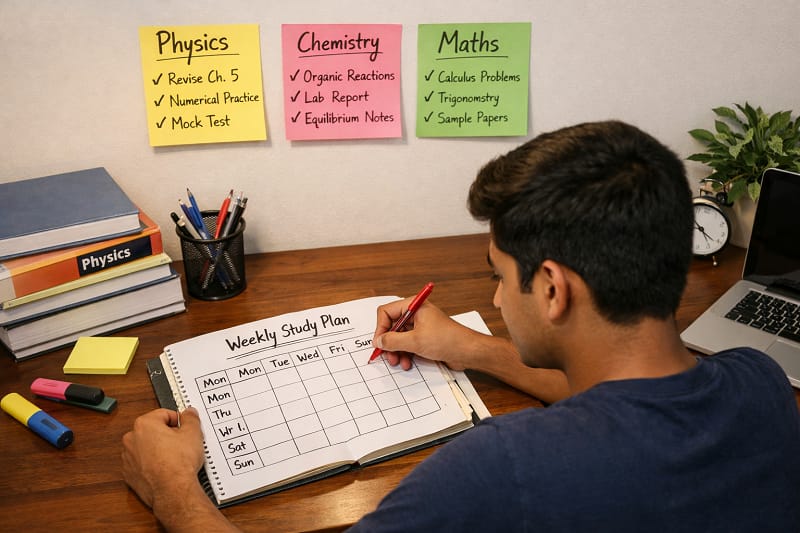
Sample weekly timetable:
-
Monday to Friday: 3 hours per subject daily, rotating Physics, Chemistry, and Mathematics.
-
Saturday: Focus on revision, clearing doubts, and self-assessment.
-
Sunday: Rest or light review.
Daily subject-wise study slots:
| Time Slot | Subject | Duration |
|---|---|---|
| Morning | Mathematics | 2 hours |
| Afternoon | Physics | 1.5 hours |
| Evening | Chemistry / Biology (alternate daily) | 1.5 hours |
Best daily routine with school and coaching:
Balance schoolwork, coaching assignments, and self-study with clear study hours dedicated to each activity.
Time-blocking and productivity tips:
Block specific hours for focused studying and break time to improve productivity and concentration.
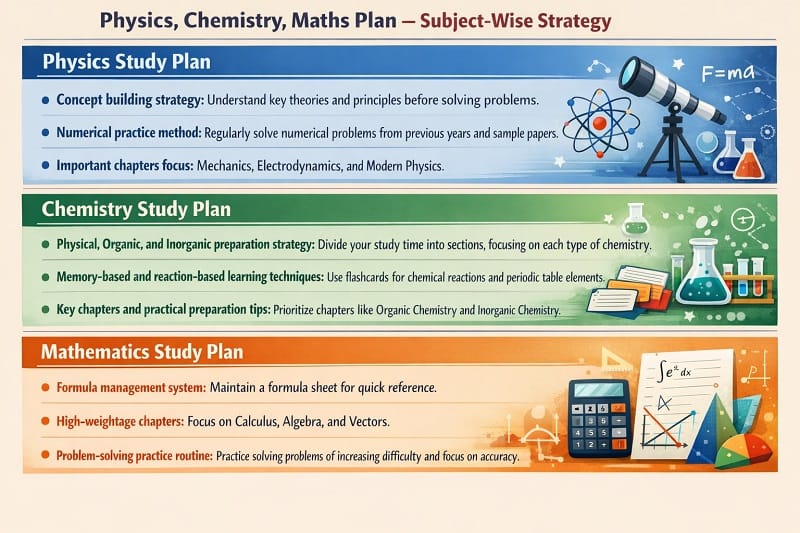
Physics, Chemistry Maths Plan – Subject-Wise Strategy
(Supports: physics chemistry maths plan)
Physics Study Plan
-
Concept building strategy: Understand key theories and principles before solving problems.
-
Numerical practice method: Regularly solve numerical problems from previous years and sample papers.
-
Important chapters focus: Mechanics, Electrodynamics, and Modern Physics.
Chemistry Study Plan
-
Physical, Organic, and Inorganic preparation strategy: Divide your study time into sections, focusing on each type of chemistry.
-
Memory-based and reaction-based learning techniques: Use flashcards for chemical reactions and periodic table elements.
-
Key chapters and practical preparation tips: Prioritize chapters like Organic Chemistry and Inorganic Chemistry.
Mathematics Study Plan
-
Formula management system: Maintain a formula sheet for quick reference.
-
High-weightage chapters: Focus on Calculus, Algebra, and Vectors.
-
Problem-solving practice routine: Practice solving problems of increasing difficulty and focus on accuracy.
Biology Study Plan (for PCB students)
-
NCERT-based reading strategy: Focus on NCERT textbooks for theory.
-
Diagrams, terminology, and revision techniques: Regularly practice diagrams and biological terms for clarity.
-
Important chapters focus: Plant and Animal Physiology, Genetics, and Ecology.
Smart Revision Strategy for CBSE Class 12 Science
Short notes and formula sheets: Create concise notes that highlight key formulas and concepts for each subject.
Chapter-wise quick revision method: Go over summary notes for each chapter in the last month before the exam.
Weekly and monthly revision cycles: Revise subjects weekly, and have a more intensive review at the end of each month.
Practice Plan – Sample Papers and Previous Year Questions
How often to attempt mock tests:
Start attempting mock tests around 2–3 months before the exams and gradually increase the frequency as the exam date approaches. Make sure you regularly practise from the CBSE Official Sample Question Papers to understand the latest exam pattern and marking scheme.
How to analyse mistakes effectively:
After every mock test, carefully analyse your mistakes and note the topics where you lose marks. Revise those chapters immediately and track whether your accuracy improves in the next test.
Using mock tests to improve accuracy and speed:
Mock tests play a major role in improving time management, question selection and overall exam confidence. Consistent practice helps you build both speed and accuracy under real exam conditions.
Balancing Theory and Practical Exams
Importance of practical exams: Practical exams are essential for subjects like Chemistry and Biology. Ensure you’re prepared for the viva and practical exams by practicing experiments.
How to prepare for practical files, viva, and experiments: Maintain a practical file, review experiments, and ensure you’re comfortable with the viva questions.
Suggested schedule for theory + practical preparation: Dedicate 2-3 days a week for practical exam revision and ensure regular theory revision.
How to Balance School, Coaching, and Self-Study in Class 12 Science
Why students struggle to manage all three: With school, coaching, and self-study, students often feel overwhelmed. Time management is key to balancing all aspects.
The 3-pillar approach:
-
School learning: Focus on NCERT-based learning.
-
Coaching support: Use coaching to boost difficult concepts and practice.
-
Self-study routine: Reinforce concepts by studying on your own.
How to use NCERT and coaching material together: Start with NCERT for fundamentals, and use coaching material for advanced concepts and practice.
Frequently Asked Questions (FAQs)
Is coaching enough for Class 12 science preparation?
Coaching provides guidance but should be supplemented with self-study for deeper understanding.
Should I focus on NCERT or coaching material first?
Start with NCERT for foundational knowledge, and use coaching material for advanced topics.
Conclusion – How to Follow This CBSE Class 12 Study Plan Science Successfully
A well-structured CBSE Class 12 study plan for Science gives you clarity, direction and confidence throughout your preparation journey. Most importantly, it helps you stay organised and avoid last-minute stress.
To make your preparation more focused, you can also follow the latest subject-wise guides, revision strategies and exam updates available on Insight Study Hub –
👉 https://insightstudyhub.com/
Follow the subject-wise strategy, revise regularly and keep analysing your mistakes using reliable resources. Stay disciplined, stay consistent, and your results will follow naturally.







5 comments