Board Exams
board exam strategy, board exams, CBSE, cbse board exam revision plan, cbse exam preparation tips, cbse last minute revision, cbse revision strateg 2026, cbse revision strategies for 2026 success, cbse revision strategy, CBSE study plan, education, exam preparation, revision tips, students, study strategy
Insight Study Hub
3 Comments
CBSE Revision Strategy: Smart & Effective Plan for Board Exam Success

When board exams are close, studying more is not always the solution. Revising smartly is. A strong CBSE revision strategy helps you remember faster, reduce silly mistakes and walk into the exam hall with confidence. Whether you are preparing for your first board exam or helping your child prepare, the goal of revision is simple – convert what you already studied into marks.
This guide is designed exactly for students of the Central Board of Secondary Education who want a clear, practical and stress-free way to revise.
Overview of How Proper Planning Leads to Better Exam Results
A revision plan that includes a realistic timetable, active study techniques, and proper practice can set you up for success. The key to achieving high marks in CBSE exams lies in consistency, focus, and the strategic approach to revising each subject. With the right revision strategy, you can master every subject and boost your chances of top performance.
Key CBSE Revision Strategies for 2026 Success
A structured and well-planned approach to revision is essential for students preparing for exams conducted by the Central Board of Secondary Education. Most importantly, a clear revision framework makes your preparation smoother, more organised, and far more effective. In addition, it helps you stay consistent and confident throughout your exam journey.
Below are the key elements you should include in your revision strategy.
Importance of Clear Goals for Revision
First of all, setting clear goals is the foundation of an effective revision strategy. For example, your goal may be to master a difficult chapter, revise formulas, or strengthen a weak subject.
Moreover, having specific and measurable targets allows you to track your progress easily. At the same time, it keeps you motivated and focused during long study sessions.
In addition, you should break large goals into smaller and achievable tasks. As a result, revision becomes less stressful and far more manageable. Most importantly, reviewing your progress regularly helps you stay on the right track.
Step-by-Step Revision Approach for Optimal Results
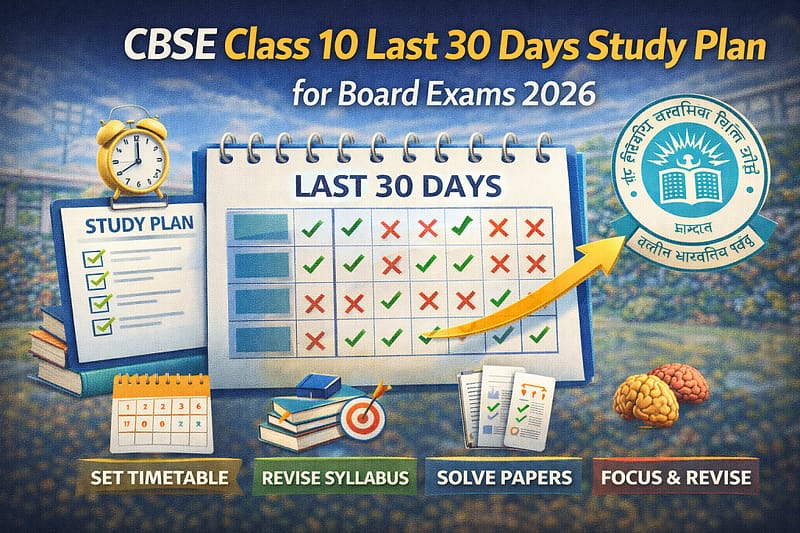
To begin with, create a daily revision plan that clearly outlines what topics you will study each day. Then, divide your time wisely among all subjects instead of concentrating on only one area.
Furthermore, revise difficult topics earlier in the day when your concentration level is higher. At the same time, mix easy and challenging chapters to maintain balance.
In addition, following a step-by-step structure prevents last-minute pressure. As a result, you can revise every subject properly without feeling overwhelmed. Overall, a methodical approach ensures better time management and stronger topic coverage.
Top Strategies to Maximise Your CBSE Exam Performance
Most importantly, focus on high-weightage topics first, as they can significantly impact your final score. In addition, practise previous years’ question papers regularly to understand the exam pattern and marking scheme.
Moreover, using quality revision resources and short notes helps you revise faster and more effectively. At the same time, applying active recall techniques strengthens memory retention.
Furthermore, regular self-testing allows you to identify mistakes early. As a result, you can correct weak areas before the final exam. Ultimately, combining smart planning, consistent practice and focused revision will help you perform with greater confidence in your CBSE board exams.

CBSE Revision Strategy: Step-by-Step Plan
Step 1: Analyse Your Syllabus and Weak Areas
Before opening any book, take 15 minutes and ask yourself:
- Which chapters do I forget easily?
- Where do I lose marks in tests?
- Which subjects need more practice?
Create a simple list:
- ✅ Strong chapters
- ⚠️ Average chapters
- ❌ Weak chapters
Always start revision from weak and average areas. Strong chapters should be revised later for speed and confidence.
Step 2: Make a Simple and Realistic Revision Timetable
Avoid complicated schedules. A good revision timetable should:
- fit your school or tuition hours,
- allow short breaks,
- and rotate subjects daily.
Sample daily revision structure
| Time Slot | Task |
|---|---|
| 1 hour | Weak chapter revision |
| 45 minutes | Practice questions |
| 30 minutes | Short notes / formulas |
| 30 minutes | Light subject (language / reading) |
Consistency matters more than long hours.
Step 3: Revise Using Short Notes and Formula Sheets
Your revision should be fast.
Use:
- one-page chapter summaries,
- formula sheets,
- mind maps for theory subjects.
For example, in Science, keep:
- formulas on one sheet,
- definitions on another,
- diagrams separately.
This method allows you to revise a full chapter in 15–20 minutes.
Step 4: Practice Sample Papers and Previous Year Questions
Practice is not optional during revision.
Follow this rule:
- solve one paper,
- check it honestly,
- write down your mistakes,
- revise only those weak areas again.
Do not just check answers. Ask: Why did I lose this mark?
This reflection is where improvement actually happens.
Step 5: Focus on NCERT Before Any Other Book
During revision, NCERT should be your first and last reference.
Why?
- most questions are directly or indirectly based on it,
- definitions and examples are taken from it,
- diagrams and activities are often asked in exams.
Use reference books only after your NCERT concepts are clear.
7 Proven CBSE Revision Strategies for 2026
To help you create a solid revision plan, here are 7 proven strategies that can improve your CBSE exam performance.
1. Plan Your Revision with a Timetable
- Designing a Realistic Timetable: Break down your subjects and plan a specific time for each one. A balanced timetable ensures that no subject is neglected.
- Prioritizing Subjects Based on Difficulty and Exam Schedules: Allocate more time to subjects or topics that are more difficult or carry more weight in the exam.
2. Active Revision Techniques for Effective Retention
- Active Recall, Concept Mapping, and Flashcards: These techniques help in better retention. Use flashcards for key terms and formulas. Concept mapping is excellent for visualizing complex ideas.
- Benefits of Spaced Repetition: Revisit topics at regular intervals to enhance memory retention, avoiding cramming at the last minute.
3. Focus on High-Weightage Topics
- Identifying Important Topics from Past Papers: Past papers often highlight recurring topics that are frequently tested. Make sure to cover these thoroughly.
- Subject-Specific Strategies (Maths, Science, Social Science, Languages): Tailor your revision strategy to the needs of each subject. For example, practice maths problems regularly, while focusing on theories for Social Science.
4. Use NCERT and Revision Resources
- The Role of NCERT Textbooks and Other Essential Resources: NCERT textbooks are your base. They cover all key topics and are aligned with the CBSE syllabus.
- Benefits of Mock Tests, Sample Papers, and Revision Books: Solve mock tests and sample papers to understand the exam pattern. These resources help you assess your preparation and work on weak areas.
5. Regular Breaks and Healthy Lifestyle
- Importance of Taking Breaks and Staying Healthy: Avoid burnout by taking regular breaks. The brain absorbs information more efficiently when you rest.
- Maintaining a Positive Routine to Reduce Stress and Improve Focus: A balanced routine, which includes a healthy diet and adequate sleep, will enhance your cognitive function.
6. Mock Tests and Self-Assessment
- How Mock Tests Simulate Exam Conditions: Mock tests are an excellent way to practice time management under exam-like conditions.
- Identifying Weak Areas Through Self-Assessment: After each mock test, assess your performance. Focus on areas where you need improvement.
7. Staying Motivated and Confident
- Tips to Stay Positive and Manage Exam Anxiety: Break down your revision into small tasks. Celebrate small victories, like finishing a chapter.
- Maintaining Focus as the Exam Day Approaches: As exam day draws closer, stay calm. Remind yourself that consistent preparation leads to success.’
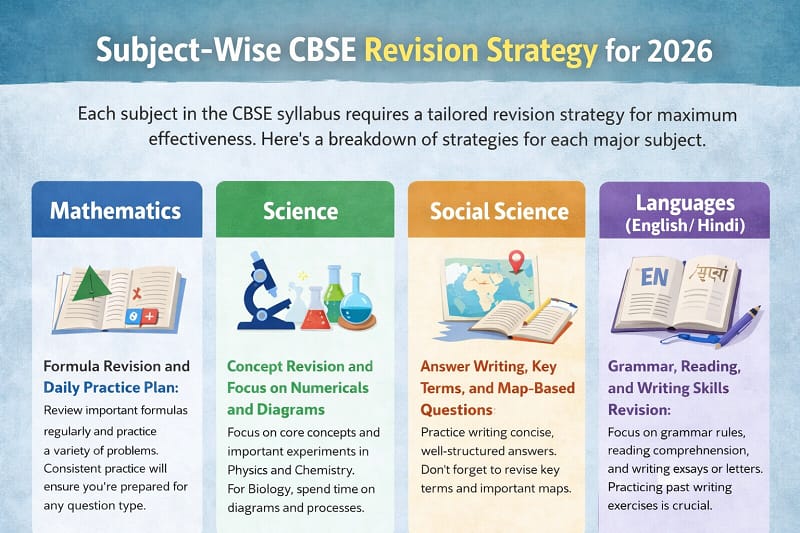
Subject-Wise CBSE Revision Strategy for 2026
Each subject in the CBSE syllabus requires a tailored revision strategy for maximum effectiveness. Here’s a breakdown of strategies for each major subject.
| Subject | Revision Strategy |
|---|---|
| Mathematics | Formula Revision and Daily Practice Plan: Regularly review important formulas and practice a variety of problems. Consistent practice prepares you for any question type. |
| Science | Concept Revision and Focus on Numericals and Diagrams: Focus on core concepts in Physics and Chemistry. For Biology, concentrate on diagrams and processes. |
| Social Science | Answer Writing, Key Terms, and Map-Based Questions: Practice concise, well-structured answers. Revise key terms and important maps for better retention. |
| Languages (English/Hindi) | Grammar, Reading, and Writing Skills Revision: Revise grammar rules, reading comprehension, and essay/letter writing. Practicing past writing exercises is essential. |
One-Week CBSE Revision Strategy (Sample Plan)
In the final week before exams, a focused revision plan is key. Here’s an example of a one-week revision schedule:
| Day | Focus |
|---|---|
| Monday | Maths + English |
| Tuesday | Science (Physics / Chemistry) |
| Wednesday | Social Science |
| Thursday | Maths + Science (Biology) |
| Friday | Language + weak chapter |
| Saturday | Full sample paper |
| Sunday | Error revision & light study |
Mistakes to Avoid During CBSE Revision
To ensure a smooth revision journey, avoid the following common mistakes:
- Ignoring Weak Topics and Last-Minute Studying: Don’t leave difficult topics for the last minute. They need consistent attention over time.
- Skipping Mock Tests: Practice is key. Mock tests help you familiarize yourself with the exam format and time constraints.
How Parents Can Support Students During Revision
Parents play a crucial role in the revision process. Here’s how they can help:
- Creating a Stress-Free Environment: Encourage a calm and supportive atmosphere at home to reduce stress.
- Helping with Time Management and Motivation: Assist with creating a timetable and help maintain motivation throughout the revision period.
Frequently Asked Questions (FAQs) on CBSE Revision Strategy
Is solving sample papers enough for CBSE revision?
While sample papers are important, ensure that you also revise from textbooks and notes to cover all areas of the syllabus.
Should I revise all subjects every day?
No. Focus on 2-3 subjects each day, rotating them for balanced preparation.








3 comments